Guide
Marinades that actually work
How Lebanese shawarma marinades are actually built — the role of acid, dairy, fat, salt and spice, the ratios that work, and how long each protein should sit before it cooks.
The five components
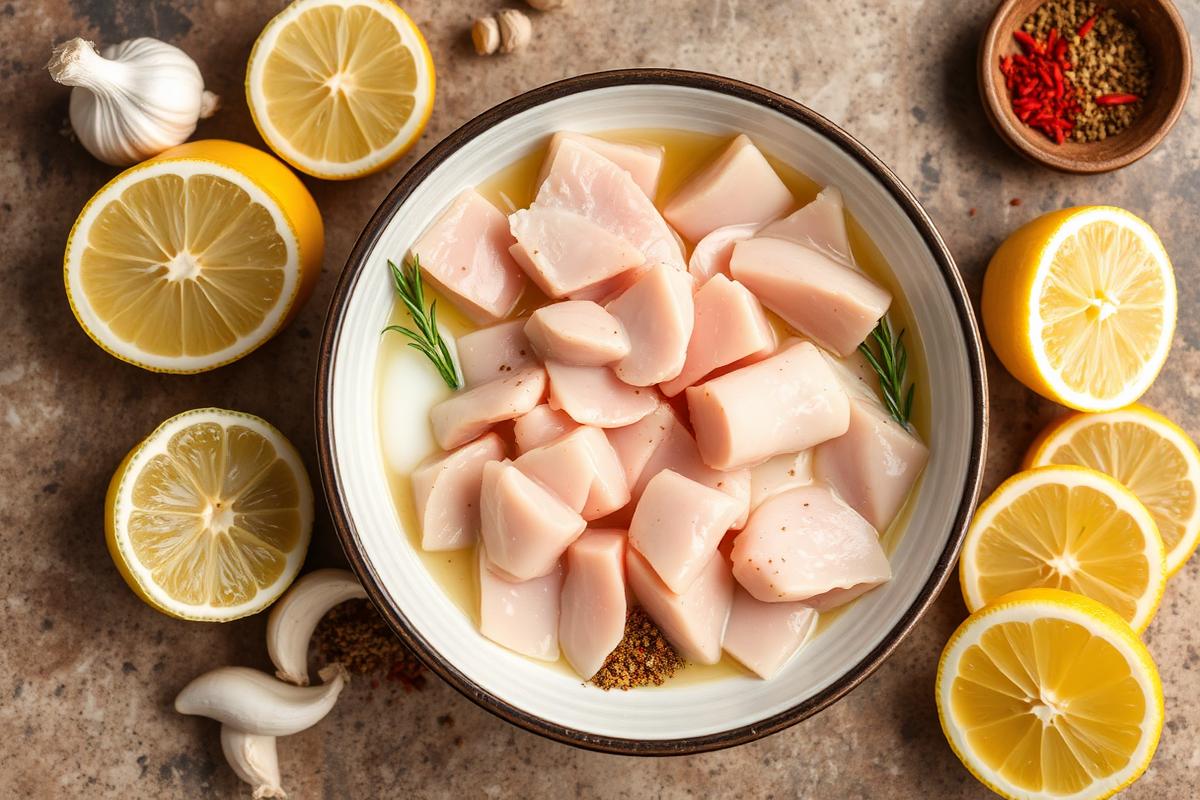
Every good shawarma marinade is built from five parts, and each has a job. Acid (lemon or vinegar) loosens the surface proteins and adds brightness. Dairy (yoghurt) tenderises gently and helps the spices cling. Fat (olive oil) carries the fat-soluble aromatics and stops the surface drying. Salt seasons deep into the muscle through diffusion. Spice provides the identity. Leave out any one of them and you can taste the gap: no acid tastes flat, no fat tastes dusty, no salt tastes hollow.
A working base ratio
For each kilogram of meat, start with 120 ml yoghurt, 45 ml olive oil, 30 ml lemon juice, 15 ml vinegar, 15 g salt and 25-30 g of total ground spice. That is enough to coat without pooling. Marinade should cling to the meat like a thin paint, not swim around it. If your bowl has liquid sitting in the bottom after mixing, you have used too much and the meat will steam rather than sear.
Acid: less than you think
Acid works only on the outer few millimetres, and it keeps working. Beyond about twelve hours in a strongly acidic marinade the surface proteins denature so far that the texture turns chalky and mealy — the same effect as ceviche. Vinegar is the classic choice for beef shawarma because it is sharper and more aggressive; lemon is gentler and better suited to chicken. Pomegranate molasses adds acid plus sweetness for browning.
Why yoghurt
Yoghurt is a mild acid buffered by calcium and protein, so it tenderises slowly and forgives longer marinating times. Its milk proteins and sugars also brown beautifully, which is why yoghurt-marinated chicken develops that mottled dark crust. Use full-fat and strain it if it is very loose; low-fat yoghurt splits and leaves a watery film.
The spice blend
The Lebanese seven-spice backbone is allspice, black pepper, cinnamon, cloves, coriander, cumin and nutmeg. For shawarma specifically, weight it towards cumin, coriander and paprika for the savoury body, allspice and cinnamon for warmth, and a small amount of cardamom and cayenne for lift and heat. Toast whole spices in a dry pan until fragrant and grind them yourself when you can — pre-ground spice loses most of its volatile aroma within a few months.
Salt and timing
Salt at 1.5 to 2 percent of the meat's weight. Unlike acid, salt keeps improving the meat the longer it sits, drawing moisture out and then back in carrying dissolved flavour. Salting early is why an overnight marinade seasons all the way through instead of just on the surface. If you are short on time, salt the meat first on its own for twenty minutes, then add the rest of the marinade.
How long per protein
Chicken thigh: 4 to 24 hours, best at 12. Chicken breast: 2 to 6 hours, no longer. Beef sirloin and top round, thinly sliced: 1 to 12 hours. Lamb shoulder, whole: 6 to 24 hours. Lamb cut thin: 2 to 8 hours. Cauliflower and vegetables: 30 minutes is plenty, because there is no muscle to tenderise and the spice paste is essentially a coating.
Before it hits the heat
Take marinated meat out of the fridge thirty minutes ahead so it is not fridge-cold. Then drain or wipe off the excess: a thick wet layer of marinade boils on the pan surface and prevents browning entirely. You want the marinade absorbed into the meat and a thin film left behind, not a coating. Never reuse marinade that has held raw meat unless you boil it hard for several minutes first.
Making it your own
Once the base ratio is second nature, adjust one variable at a time. Swap the vinegar for verjuice, add a spoon of tomato paste for colour and sweetness, grate in onion for enzymes that tenderise further, or fold in a tablespoon of tahini for a richer, nuttier crust. Keep notes on what you changed — marinade improvement is incremental, and it is very easy to forget which batch was the good one.