Guide
Lebanese spice blends: baharat, seven spice and shawarma rub
How to build the three spice mixes that underpin almost every recipe on this site — with weights, toasting method, storage advice and the common substitutions that actually work.
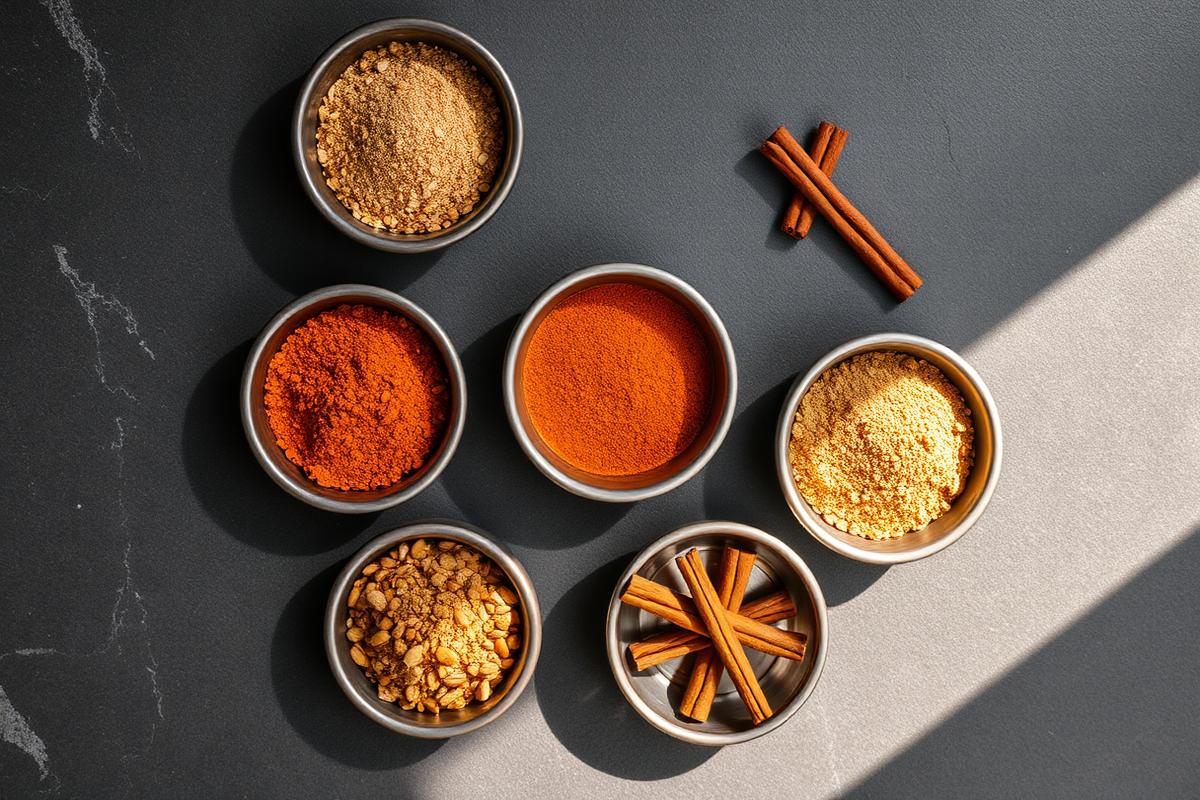
Baharat and seven spice are not the same thing
Baharat simply means spices in Arabic, and it changes from country to country: the Gulf version leans on dried lime and turmeric, the Turkish on mint, the North African on rose petals. Lebanese seven spice — sabaa baharat — is the specific blend most home cooks mean: allspice, black pepper, cinnamon, cloves, coriander, cumin and nutmeg. A shawarma rub is a third thing again, built on top of seven spice but weighted for colour and browning with paprika and extra cumin.
Lebanese seven spice, by weight
For a jar of about 60 g: 15 g allspice, 12 g black peppercorns, 8 g coriander seed, 8 g cumin seed, 7 g cinnamon, 5 g nutmeg, 5 g cloves. Grind everything to a fine, uniform powder. Weighing rather than measuring by spoon matters here — a tablespoon of whole peppercorns and a tablespoon of ground cinnamon are wildly different amounts of spice, and volume measures are why the same recipe tastes different every time.
Shawarma rub, by weight
For about 80 g: 20 g sweet paprika, 15 g ground cumin, 10 g ground coriander, 10 g Lebanese seven spice, 8 g garlic powder, 6 g ground turmeric, 5 g black pepper, 4 g cayenne, 2 g ground cardamom. This is the mix to keep in a jar by the stove. Two heaped tablespoons plus salt, oil and acid marinates a kilogram of chicken.
Toasting whole spices
Toast the whole seeds — cumin, coriander, peppercorns, cloves — in a dry pan over medium heat, shaking constantly, for 60 to 90 seconds until they smell nutty and a wisp of smoke rises. Tip them straight out of the pan onto a cold plate; residual heat in the pan will scorch them within seconds. Let them cool completely before grinding, because warm spices clog a grinder and go pasty. Ground spices like cinnamon and nutmeg are added after grinding, never toasted.
Grinding
A dedicated electric coffee grinder is the practical tool; keep it for spices only, because coffee oils taint the blend. Grind in short pulses rather than a continuous run so the blades do not heat the spice and drive off the aromatics. Sieve the result and re-grind the coarse remainder. A mortar and pestle gives a better, more uneven texture but takes real effort with hard spices like allspice berries.
Storage and shelf life
Store blends in small airtight glass jars, away from the stove and out of the light. Heat, air and daylight are what destroy ground spice, not time on its own. A home-ground blend holds its punch for about three months and is noticeably tired by six. Make small batches often rather than a big jar once a year. Label every jar with the date — you will not remember.
Substitutions that work
No allspice? Use three parts cinnamon to one part clove and one part nutmeg. No sumac? Lemon zest plus a pinch of salt gets you most of the way. No baharat at all? Equal parts cumin, coriander and paprika with half as much cinnamon and black pepper is a perfectly serviceable emergency mix. Avoid pre-mixed supermarket shawarma seasoning where salt is the first ingredient — you lose control of the seasoning entirely.
Buying whole spices
Buy from a shop with high turnover — a Middle Eastern grocer or a spice specialist, not the supermarket rack. Whole spices should smell strong through the bag and look glossy rather than dusty. Cumin seed should be pale brown and slim; grey, brittle seed is old. Cinnamon quills should be thin and layered rather than thick, single-sheet cassia if you want the sweeter Ceylon character.